The North American electric grid should establish a new, organization to advance cybersecurity risk management practices across the industry, the Bipartisan Policy Center (BPC) recommended in a wide-ranging report released today. Against a backdrop of multiple government agencies and industry groups attempting to wrestle with the complex challenge of cybersecurity, BPC recommends that a unified group, which it calls for the purposes of discussion the Institute for Electric Grid Cybersecurity, be established "before a significant cybersecurity event occurs and requires a rapid response."
Using as its model the Institute of Nuclear Power Operations (INPO), founded in 1979 in the wake of the Three Mile Island incident to oversee risk in the nuclear power sector, BPC says the institute should develop standards and practices that complement those established by the North American Electric Reliability Corporation (NERC) and enforced by the Federal Energy Regulatory Commission (FERC). "A centralized, industry-governed institution may be in the best position to promote effective strategies for managing cyber threats that could have broader systemic impacts," the report states.
The standards and best practices developed by the institute should cover generation, transmission,
and distribution providers and market operators in the North American power sector, including municipal utilities and electric cooperatives. The mandatory standards established by NERC apply only to the bulk power sector, a situation that BPC says should be maintained.
The institute would pull together the wider electric industry to develop performance criteria and cybersecurity evaluations, analyze systemic risks, conduct event analysis, provide technical assistance and conduct training and accreditation. "We believe most utilities would see clear benefits to participating in a new cybersecurity organization. Such an organization could reduce pressure on Congress or FERC to extend more aggressive or widespread regulatory measures, offer helpful technical assistance and information, and give participants the opportunity to develop new norms for cost-recovery practices."
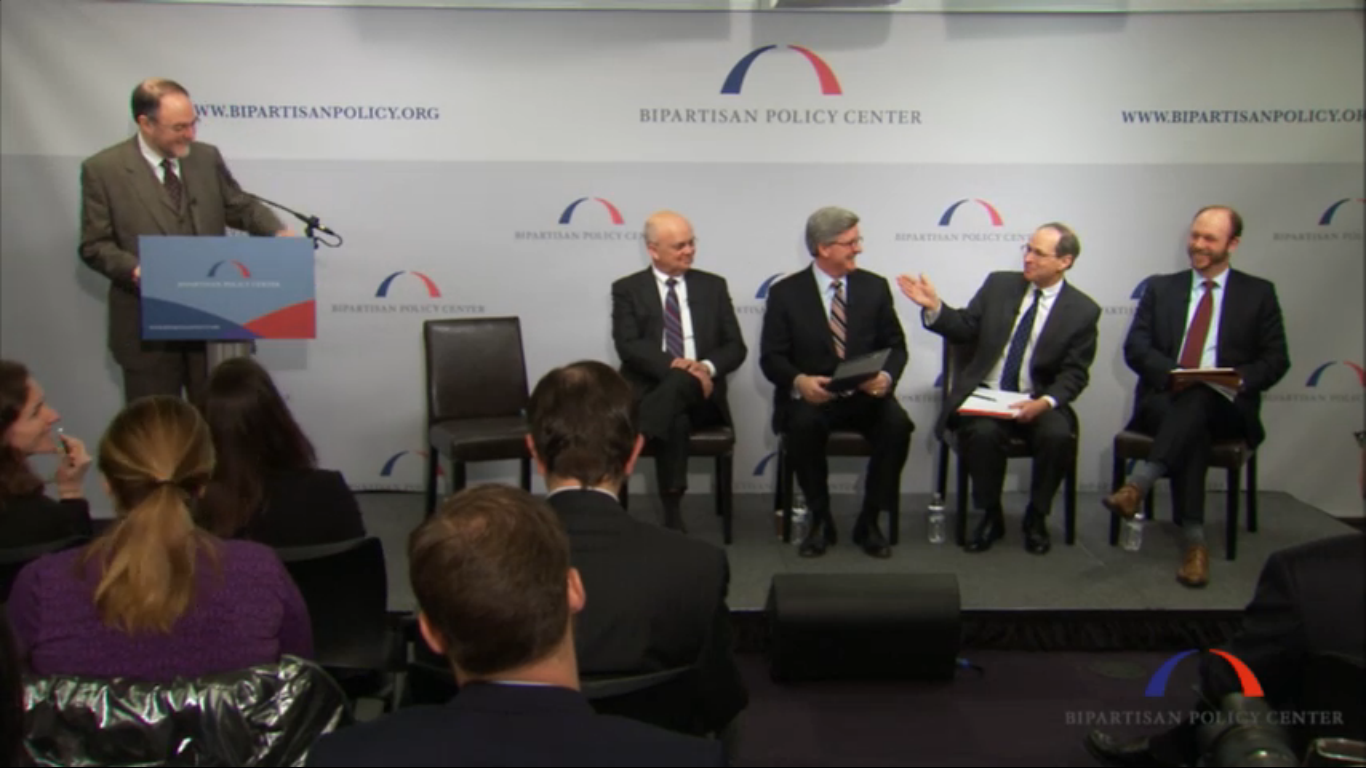
The report was co-chaired by security and energy leaders including former NSA and CIA Director Michael Hayden and steered by an advisory group consisting of experts from top energy trade associations and companies, technology suppliers and former federal and state government officials. During an event to launch the report, one of the advisory group members disagreed with the report's recommendation to create a separate electric sector cybersecurity institute.
"We embrace the recommendations in this report," Scott Aaronson, Senior Director of National Security Policy, Edison Electric Institute, said. "I push back a little on a new organization" because there are already many such organizations in existence, including NERC and a group housed within NERC, the Electricity Sector Information Sharing and Analysis Center (ES-ISAC).
One of the report's recommendations is to split off the ES-ISAC from NERC itself because of "industry’s reluctance to share data for fear of triggering regulatory non-compliance actions, violating privacy or antitrust protections, or potentially disclosing proprietary or confidential business information."
Among the report's many other recommendations, which cover a wide swath of cybersecurity-related issues including information sharing, incident response planning and regulatory cost recovery issues:
- The federal government should provide backstop cybersecurity insurance until the private market develops more fully;
- The electric power sector and the federal government should collaborate to establish a certification program that independently tests grid technologies and products to verify that a specified security standard has been met;
- The National Institute of Standards and Technology (NIST) should include guidelines for related skills training and workforce development in its Cybersecurity Framework;
- DHS should work with universities and colleges to develop engineering and computer science curricula built around industrial control system cybersecurity;
- The U.S. Department of Energy (DOE) should assist states in providing funds so that regulatory staff can participate in academic programs, more intensive training institutes, and continuing education programs


